
You’re scrolling through your messages, someone sends “ONB,” and you freeze. Is that a typo? An acronym you should already know? Don’t worry — you’re not the only one who’s been there. Internet slang moves fast, and ONB is one of those abbreviations that genuinely means different things depending on who’s using it, where they are, and what mood they’re in.
This guide covers every major meaning of ONB, when to use it, when to avoid it, and how to actually tell what someone means when they type it.
The Real Meanings Behind ONB — All of Them
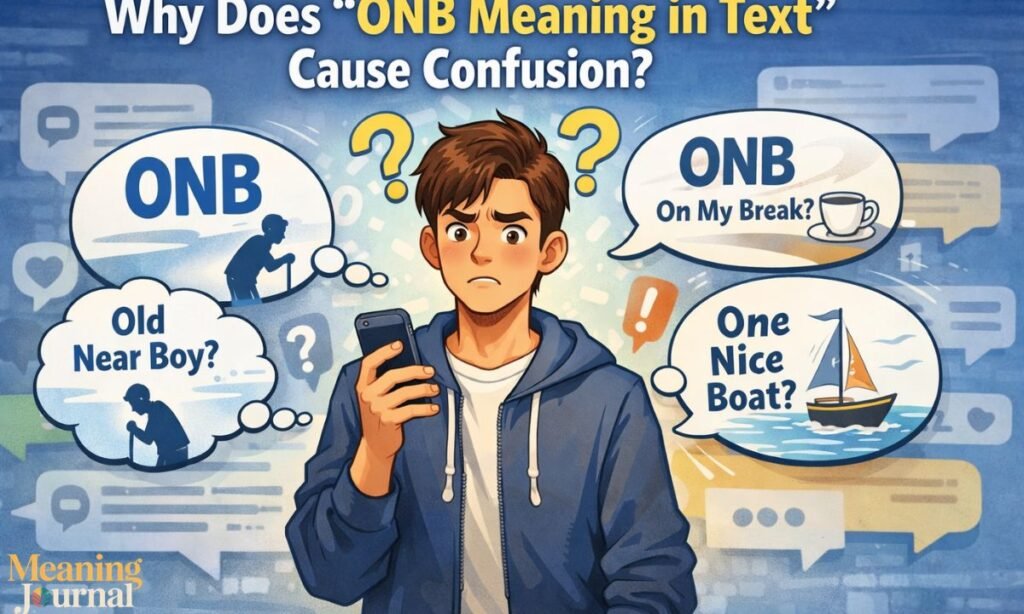
Here’s what makes ONB tricky: it doesn’t have one universal meaning. Unlike many abbreviations online, ONB can stand for different phrases based on who’s using it and where. Let’s go through each one clearly.
ONB = “On Bro”
The most widely used meaning of ONB is “On Bro” — an internet slang term used primarily on Snapchat, TikTok, and in text messages to show sincerity, agreement, or to swear that something is true. It’s similar to saying “I swear” or “On God.”
Think of it as a verbal seal of truth. When someone types “I would never do that, ONB,” they’re not just saying it — they’re staking their credibility on it.
“On Bro” evolved from urban slang and hip hop culture, where phrases like “on my mama” were used to swear on something. Instead of swearing on something abstract, you’re swearing on someone close — like a friend or “bro.” That’s why it carries emotional intensity in texting.
ONB = “Outward Nose Breath”
This one surprises a lot of people. On TikTok and increasingly on Instagram, ONB often stands for “Outward Nose Breath” — referring to the subtle reaction of exhaling through your nose when something is mildly amusing, not funny enough for a full laugh, but amusing enough to elicit some reaction.
The outward nose breath is the opposite of the screaming-laughing emoji. It’s understatement as reaction. TikTok’s comment culture rewards precision — using “onb” instead of generic “lol” or “haha” signals that you found something genuinely amusing but you’re being honest about the degree.
So if someone comments “onb” under a meme, they aren’t being dismissive — they’re just giving you the most honest laugh reaction possible.
ONB = “Oh No Baby”
This version of ONB is often used in a funny or sarcastic way. It comes from a popular internet meme and is usually said when someone does something embarrassing or surprising. Example: “ONB, why would you post that?”
It’s playful, slightly mocking, and almost always meant in a lighthearted way among friends. Use it carefully with people you don’t know well — sarcasm doesn’t always land in text.
ONB = “On Nothing Bro”
This version is usually used to emphasize something isn’t true and is mainly used in arguments or call-outs. For example, if one of your friends is talkative in a Snap group chat but quiet in person, you can say: “He talks too much here but ONB in reality!”
Where ONB Came From: The Cultural Roots
ONB is believed to have originated from Chicago street slang and African American Vernacular English (AAVE). That’s the same cultural tradition that gave us “no cap,” “deadass,” “on God,” and dozens of other phrases that Gen Z absorbed into everyday digital speech.
The logic is simple and deeply human: when people want to emphasize they’re being real, they swear on something meaningful. Historically it was “on my mother’s life” or “on my soul.” Online, it got compressed into “on bro” — and eventually, ONB.
Gen Z makes up 32% of people worldwide, and slang like ONB has spread rapidly because it helps younger users communicate nuance, add tone to text-based conversations, and signal cultural awareness.
How to Tell Which ONB Someone Means
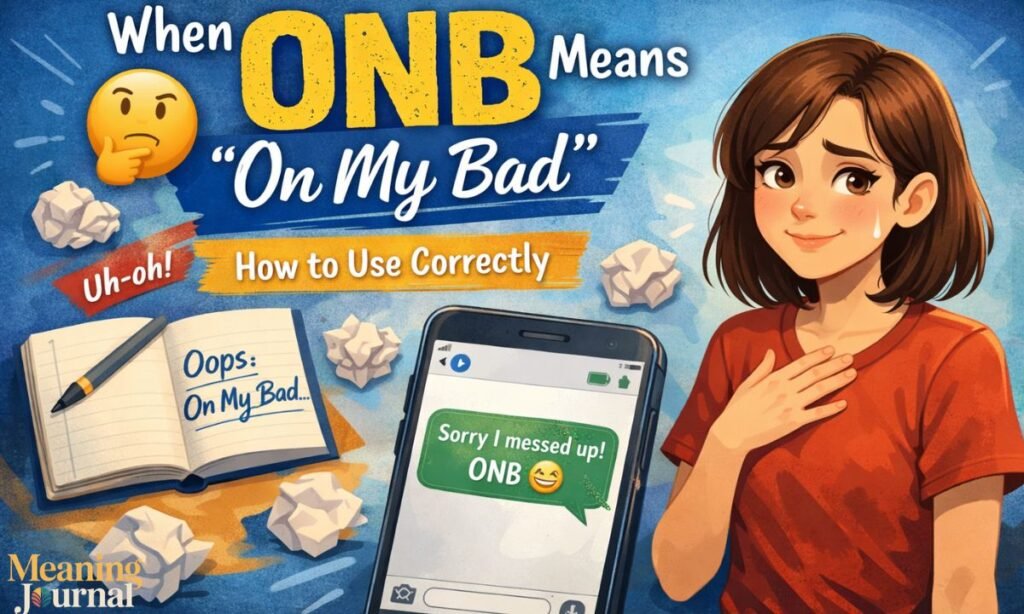
This is the real skill — reading context. Here’s a simple breakdown based on platform and tone:
If you see it in a text message from a friend making a claim: They almost certainly mean “On Bro” — they’re emphasizing that what they said is true. Example: “I finished the assignment already, ONB.”
If you see it in a TikTok comment under a funny video: It likely means “Outward Nose Breath” — a subtle acknowledgment of mild humor. Example: “onb this is exactly my dog every morning”
If you see it in response to something cringe or awkward on Snapchat: It’s probably “Oh No Baby” — a sarcastic, playful reaction. Example: “ONB, they really matched those outfits on purpose?”
If it appears during a casual argument or denial: It’s most likely “On Nothing Bro” — pushing back on a claim.
To younger users — Gen Z and Gen Alpha especially — ONB is about speaking the truth or creating emphasis. If you see it in a TikTok comment, “On Bro” is meant to underline the point being made in the video.
Real Conversation Examples Using ONB
Reading slang in context is the fastest way to understand it. Here are some real-world style scenarios:
Scenario 1 — Making a Sincere Promise:
Alex: “Are you actually going to show up this time?” Jordan: “ONB I’ll be there at 7, stop stressing.”
Here, ONB = “On Bro.” Jordan is doubling down on their promise.
Scenario 2 — Reacting to Mildly Funny Content:
[Group chat, someone shares a relatable meme] Sam: “onb this is literally every Sunday”
Here, ONB = “Outward Nose Breath.” Sam found it amusing but isn’t dramatically laughing.
Scenario 3 — Sarcastic Reaction:
[Someone posts a questionable fashion photo] Comment: “ONB who let them leave the house like that”
Here, ONB = “Oh No Baby.” Classic meme-style disbelief.
Scenario 4 — Denying Something:
“People saying I talked behind your back — ONB that wasn’t even me.”
Here, ONB = “On Nothing Bro.” A flat denial with emphasis.
ONB vs. Similar Slang — What’s the Difference?
You’ve probably seen a handful of these floating around. Here’s how ONB compares to phrases it’s often grouped with:
ONB vs. “No Cap” — Both signal honesty, but differently. “No cap” means “no lie” and is used to say you’re being honest. ONB (“On Bro”) is more like swearing on something to emphasize you mean what you say. They’re often used interchangeably.
ONB vs. “On God” — Very similar. “On God” is slightly more intense and has religious undertones. ONB is more casual, rooted in friendship rather than spirituality.
ONB vs. “Deadass” — “Deadass” (originated in New York slang) means “seriously/genuinely.” ONB serves a similar purpose but feels more like an oath than a descriptor.
ONB vs. “FR” (For Real) — FR is shorter and more universal. ONB carries more weight because it’s swearing on something or someone.
When a Girl Says ONB — Does the Gender Matter?
Short answer: not really. When a girl says ONB, it usually emphasizes sincerity or honesty. Tone matters — she could be joking, teasing, or seriously promising.
The meaning doesn’t change based on the sender’s gender. What matters far more is the context — what they’re responding to, the platform they’re on, and whether the conversation is playful or serious. ONB is a unisex expression, just like “no cap” or “for real.”
If a girl you’re texting uses ONB while making a promise, she’s stressing she’s serious. If she uses it in response to something funny or cringeworthy, it’s likely “Outward Nose Breath” or “Oh No Baby.” Read the surrounding conversation, not just the acronym.
The Unique Psychology of ONB: Why Swearing “On Bro” Works
Here’s something most guides skip entirely — why this type of language actually lands psychologically.
Humans have always used oath-swearing as a social contract. “I swear on my life,” “cross my heart” — these aren’t just phrases; they’re mechanisms of trust. By invoking something or someone you value, you’re signaling that the cost of lying would be high.
When people say ONB, they’re tapping into trust psychology — it’s a shortcut for expressing truth in slang. In a world where text messages lack tone of voice, body language, or eye contact, ONB fills a real communicative gap. It tells the reader: “I’m not just saying this. I mean it.”
This is also why ONB (as “On Bro”) feels stronger and more personal than something like “FR” (for real). You’re not just asserting truthfulness — you’re tying your credibility to a relationship. That subtle emotional weight is exactly what makes it resonate with younger digital communicators.
ONB in Different Settings: Where It Works and Where It Doesn’t
Friends and Peer Groups ✅
This is ONB’s natural habitat. Whether you’re making plans, backing up a wild story, or reacting to a meme, ONB fits naturally into casual friend conversations on Snapchat, iMessage, or Instagram DMs.
Professional or Work Settings ❌
ONB is informal slang and should be avoided in professional or formal settings. Keep slang for social spaces.
Sending “ONB I’ll have the report done by Friday” to your manager is a fast way to look unprofessional. Stick to clear, complete language in work emails, Slack channels with colleagues you don’t know well, or any formal context.
Dating or New Acquaintances ⚠️
It depends entirely on the vibe you’ve established. If you’re already in a casual, playful texting rhythm with someone, ONB can feel natural and fun. If you’ve only exchanged a few messages, it might confuse them or come across as trying too hard to sound young or cool.
ONB Meaning in Medical Contexts — A Completely Different World
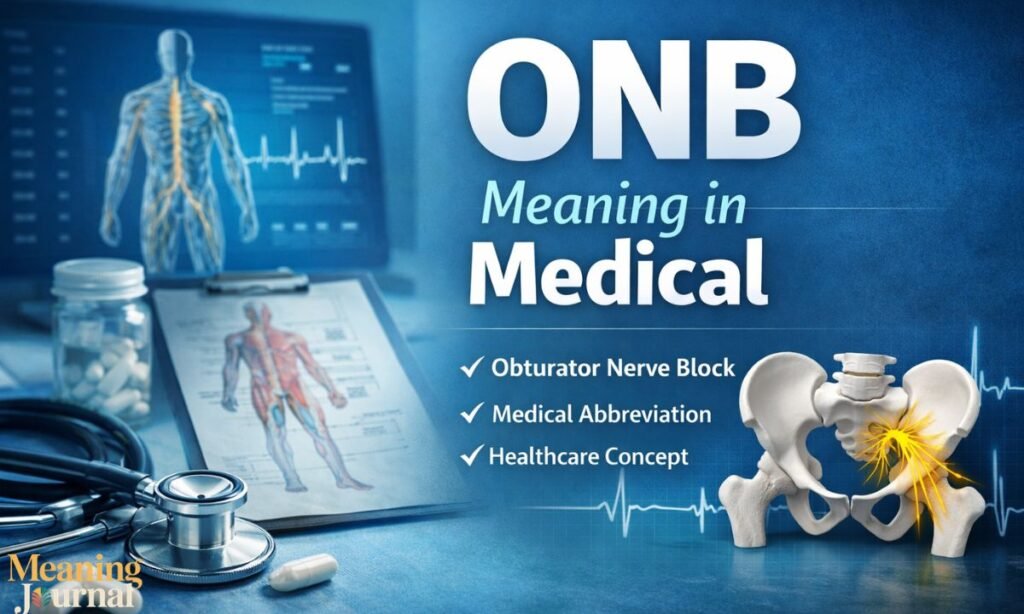
If you’re in a healthcare or academic setting and see “ONB,” it has nothing to do with texting slang. ONB in medical contexts refers to Olfactory Neuroblastoma, a rare type of cancer that originates in the olfactory nerve and is primarily found in the nasal cavity, potentially leading to various symptoms including nasal obstruction and loss of smell. All Acronyms
This abbreviation belongs entirely to oncology and clinical documentation. If you stumble across ONB in a medical report, a research paper, or a healthcare conversation, it has zero relationship to internet slang. Context really is everything with this acronym.
Should You Actually Use ONB?
Depends on a few things:
Your audience matters. If you’re texting friends who are deep into digital culture — especially teens and young adults — ONB will land perfectly. If you’re messaging someone who rarely uses slang, you might just confuse them.
Platform matters. ONB fits TikTok comments, Snap chats, and Instagram DMs naturally. It doesn’t belong in LinkedIn messages, emails, or professional Slack channels.
Tone matters. Use ONB when the emotion matches the moment. Sometimes ONB feels extra — overkill for a situation that doesn’t need that level of intensity. Don’t drop it casually into every message — it loses its punch.
If you want a safer, more universal alternative:
- Instead of “ONB” (On Bro), try: “I’m serious,” “I swear,” “for real,” or “no cap”
- Instead of “ONB” (Outward Nose Breath), try: “lol,” “heh,” or just a 😄
- Instead of “ONB” (Oh No Baby), try: “oh no,” “what were they thinking,” or “😬”
How ONB Fits Into the Bigger Picture of Gen Z Slang
ONB doesn’t exist in isolation. It’s part of a broader shift in how younger generations communicate — leaning into brevity, irony, and layered meaning. Slang like this functions almost as a social password: knowing what ONB means (and using it correctly) signals that you belong to a particular digital culture.
ONB has gained popularity because it’s short, expressive, and adds tone to text-based conversations. It helps keep interactions casual, shows cultural awareness, and allows users to convey nuanced reactions that might otherwise be lost in text.
We’re living through a moment where written conversation has almost entirely replaced spoken ones in many social contexts. Slang like ONB gives text the emotional weight that would normally come from vocal tone, facial expressions, or gestures. That’s not a small thing — it’s a real evolution in how language functions.
FAQs
What does ONB mean when someone uses it to agree with you?
They’re using it as “On Bro” — essentially saying “absolutely” or “you’re right, I’m with you on that.” It’s an emphatic confirmation.
Is ONB the same as “On God”?
Similar, but not identical. Both are oath-style emphasis phrases, but “On God” tends to carry slightly more weight. ONB is a bit more casual and buddy-to-buddy in tone.
Can I use ONB in a school group chat?
Informally, with friends in a school group? Sure. In a group chat with teachers or for academic work? Definitely not. Read the room.
What if I still can’t tell which meaning someone meant?
The safest bet: look at what they were responding to. Responding to a claim → “On Bro.” Responding to something funny → “Outward Nose Breath.” Responding to something embarrassing or cringeworthy → “Oh No Baby.” If it’s still ambiguous, just ask — most people don’t mind clarifying.
Is ONB only used by Gen Z?
Primarily, yes. Older generations or those unfamiliar with internet culture might not recognize it, or may misinterpret the tone. But slang always travels upward generationally — don’t be surprised if it becomes more widely understood over time.
Key Takeaways
- ONB most commonly means “On Bro” — an emphasis on honesty and sincerity, similar to saying “I swear.”
- On TikTok, it often means “Outward Nose Breath” — a subtle, honest reaction to mild humor.
- “Oh No Baby” and “On Nothing Bro” are secondary meanings, mostly used in sarcastic or denial contexts.
- Context is everything. The same three letters can mean four different things depending on platform and conversation.
- In medical contexts, ONB = Olfactory Neuroblastoma — entirely unrelated to slang.
- Avoid ONB in professional, formal, or mixed-age settings unless you’re sure the audience gets it.
Final Word
ONB is a perfect example of what makes modern slang simultaneously fascinating and frustrating: it’s flexible, culturally loaded, and deeply dependent on context. There’s no single definition you can memorize and apply universally.
The good news? Once you understand the four main meanings and know what to look for in the conversation around it, decoding ONB becomes second nature. You’re not just learning an acronym — you’re getting a small window into how digital communication has evolved into its own rich, nuanced language.
Next time you see ONB in your messages, don’t panic. Just ask yourself: are they swearing on something, laughing quietly, reacting to a cringe moment, or pushing back on a claim? The answer is almost always right there in the conversation itself.
