

You’re scrolling through your WhatsApp messages, and a friend texts: “Loved your new DP!” Or maybe someone on Instagram comments: “Your DP is fire 🔥.” You smile — or maybe you stop and think: what exactly does DP mean in text?
You’re not alone. Millions of people search this question every day, especially those who are new to social media, switched platforms, or encountered the term used in an unexpected way. The confusion is real because DP is one of those abbreviations that can mean different things depending on the context, platform, and even the person sending the message.
This guide breaks it all down clearly. Whether you’re a teen, a parent, a new social media user, or just curious — by the end of this article, you’ll know exactly what DP means, how it’s used, and when you should (or shouldn’t) use it yourself.
What Does DP Mean in a Text?
The short answer: DP stands for “Display Picture.”
When someone sends you a text saying “Nice DP” or “Change your DP,” they are referring to your profile photo — the image that shows up next to your name on messaging apps and social media platforms.
In the world of online communication, your DP is the first visual impression you make. It’s the small circular (or square) image visible in chat lists, comment sections, and profile pages. It is also commonly referred to as a profile picture, but “DP” remains the more popular short form in everyday texting — especially in South Asia, Africa, and among younger users globally.
Quick Answer for Featured Snippet: DP in text means Display Picture — the profile photo a user sets on apps like WhatsApp, Instagram, Facebook, or Telegram. It is the image that represents you visually in chats and on your profile.
DP Meaning in Texting and Online Chats
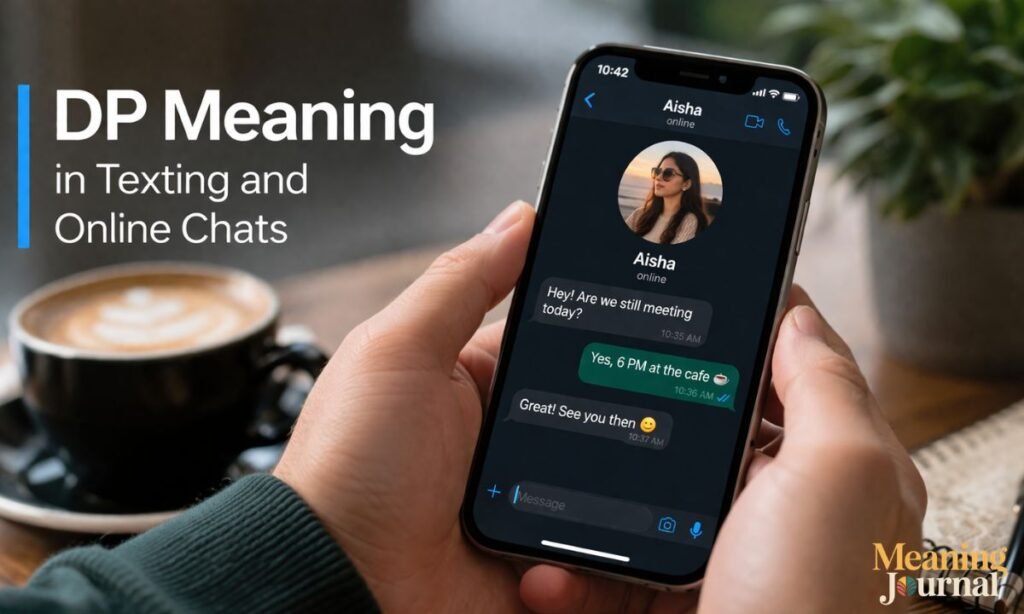
In texting and online chats, DP is one of those casual abbreviations that slipped into everyday language from the early era of internet messaging. It is short, easy to type, and instantly understood by most social media users.
Here’s how it typically appears in conversation:
- “Your DP is so aesthetic!”
- “Why did you remove your DP?”
- “Set a DP, don’t keep it blank!”
- “I saw your DP change — what’s the occasion?”
In all of these examples, DP clearly refers to someone’s profile image. The term is so widely used that it has essentially replaced the longer phrase “profile picture” in casual, informal communication.
Why DP Means Display Picture
The origin of “DP” as Display Picture dates back to the early 2000s, when platforms like MSN Messenger and Orkut allowed users to upload a small image next to their username. That image was called a display picture — and the abbreviation “DP” was born.
As messaging evolved and new platforms like WhatsApp, Facebook, and Instagram took over, the term stuck. Even though Facebook officially calls it a “profile picture” and Instagram calls it a “profile photo,” millions of users — particularly in regions where WhatsApp dominates daily communication — still use “DP” as the go-to term.
The reason it survived? It’s simply faster to type. On platforms with character limits or in quick text conversations, typing “DP” is far more efficient than spelling out “display picture” or “profile picture.”
Common Ways DP Is Used in Text Messages
Understanding how DP is used in real conversations makes it much easier to grasp its meaning. Below are the most common usage patterns:
DP as a Compliment
This is perhaps the most common use. When someone says “Nice DP” or “Lovely DP,” they’re admiring your profile photo.
- “Your DP is gorgeous!”
- “That’s such a cute DP.”
- “I love your new DP — where was that taken?”
DP as a Question
People also use DP when they’re curious about someone’s profile photo or asking about a change.
- “Why did you change your DP?”
- “Is that your new DP?”
- “Who is that in your DP?”
DP in Casual Conversation
Sometimes DP appears mid-conversation as a topic of discussion, not just a compliment.
- “Have you seen her DP? She’s at the beach!”
- “He hasn’t changed his DP in two years.”
- “Omg, your couple DP is so cute!”
Dp Mean in Text Funny
Sometimes, people use DP humorously in texts — usually to tease friends about their profile photo choices.
- “Your DP looks like a mug shot 😂”
- “Bro, that cat is not your DP… or is it? 🐱”
- “You’ve had the same DP since 2018 — it’s time, man.”
These kinds of jokes are common among close friend groups, where commenting on someone’s DP is just light-hearted banter. It’s a very normal part of digital social culture today.
DP Meaning in Chat from a Girl
When a girl mentions DP in a chat, she is almost always referring to Display Picture — there’s nothing mysterious or hidden about it. Girls frequently use the term when:
- Complimenting a friend’s new profile photo
- Asking why someone changed or removed their picture
- Suggesting a good photo as a DP
- Commenting on a romantic partner’s couple DP
For example:
- “You should totally dp that selfie from yesterday, you looked amazing!”
- “Her DP is always so aesthetic.”
- “He changed his DP again… wonder why.”
Context is key. In friendly, everyday chat — especially on WhatsApp — DP from a girl simply means Display Picture, nothing more.
DP Meaning on Different Platforms
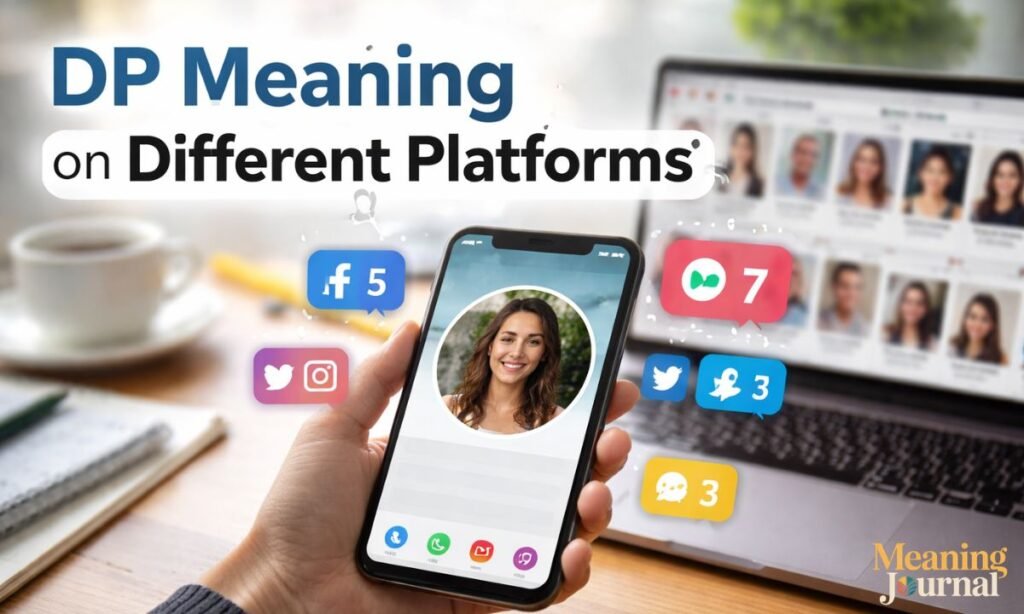
One of the reasons DP causes confusion is that different platforms use different official terminology for the same concept. Here’s a quick breakdown:
| Platform | Official Term | What People Call It |
| Profile Photo | DP | |
| Profile Photo | DP / PFP | |
| Profile Picture | DP / Profile Pic | |
| Telegram | Photo | DP |
| Twitter / X | Profile Picture | PFP / DP |
| Discord | Avatar | Avatar / PFP |
| Snapchat | Profile Picture | Bitmoji / DP |
Despite the official names varying, “DP” is universally understood across all these platforms when used in informal conversation.
DP Meaning on WhatsApp
On WhatsApp, DP is the most commonly used term for your profile photo. It’s the image visible to your contacts next to your name in chat lists, at the top of individual chats, and in your contact card. WhatsApp also allows group DPs, managed by group admins or members. Privacy settings let you control who sees your DP — everyone, only contacts, or nobody.
DP Meaning on Instagram
Instagram officially calls it a “profile photo,” but users regularly refer to it as their DP, especially in comment sections and DMs. Changing your DP on Instagram often draws immediate comments and reactions, making it a mini social event of its own.
DP Meaning on Facebook and Telegram
On Facebook, changing your DP automatically creates a timeline post that others can like and comment on — making it one of the most visible social actions you can take. On Telegram, the term DP is used casually just as it is on WhatsApp, referring to the small photo beside your name in group chats and contact lists.
Does DP Have Any Other Meanings in Text?
Yes — and this is where things get a little more nuanced. While Display Picture is the dominant meaning of DP in everyday text and social media conversations, the abbreviation does carry other meanings in different contexts.
Less Common Meanings of DP
| Meaning | Context |
| Display Picture | Social media & texting (most common) |
| Down Payment | Finance and real estate |
| Data Processing | Technology and computing |
| Dynamic Programming | Computer science / coding |
| Director of Photography | Film and media industry |
| Displaced Person | Social science / humanitarian contexts |
| Double Play | Baseball / sports |
In adult or explicit contexts, DP can carry sexual meanings (Double Penetration or Dick Pic), but these are entirely different conversations — and context makes the difference very clear. In any normal, everyday chat about social media, DP means Display Picture, full stop.
How to Understand DP from Context
The platform and the conversation topic tell you everything:
- If the message involves a profile photo, social media, or someone’s appearance → Display Picture
- If the message is about a real estate purchase or loan → Down Payment
- If someone is talking about a film crew → Director of Photography
- If the conversation is between coders → Dynamic Programming
Is DP a Safe and Neutral Term?
In the context of social media and texting, yes — DP is completely safe and neutral. It’s one of the most common, harmless abbreviations used in digital communication today. Using it to compliment someone’s photo or ask about a profile change is perfectly appropriate in both casual and semi-formal settings.
However, keep in mind that in certain adult or explicit conversations, DP can take on a very different meaning. The key is always context. If you’re chatting with friends about WhatsApp or Instagram, DP is 100% safe and normal.
When Should You Use DP in Texting?
DP fits naturally in casual, informal digital conversations. Here are the ideal scenarios:
- ✅ Complimenting a friend’s new profile photo
- ✅ Asking why someone changed their picture
- ✅ Suggesting a photo as someone’s DP
- ✅ Commenting on a celebrity or influencer’s profile image
- ✅ Casual group chats and DMs
On the other hand, avoid using “DP” in:
- ❌ Formal emails or professional communication
- ❌ Business presentations or reports
- ❌ Academic writing
- ❌ Any situation where clarity is more important than speed
In professional contexts, simply say “profile picture” or “profile photo” instead.
Also Read This: DPWM Meaning in Text: What Does “DPWM” Really Mean in Online Conversations?
Why DP Is So Popular in Text Messages
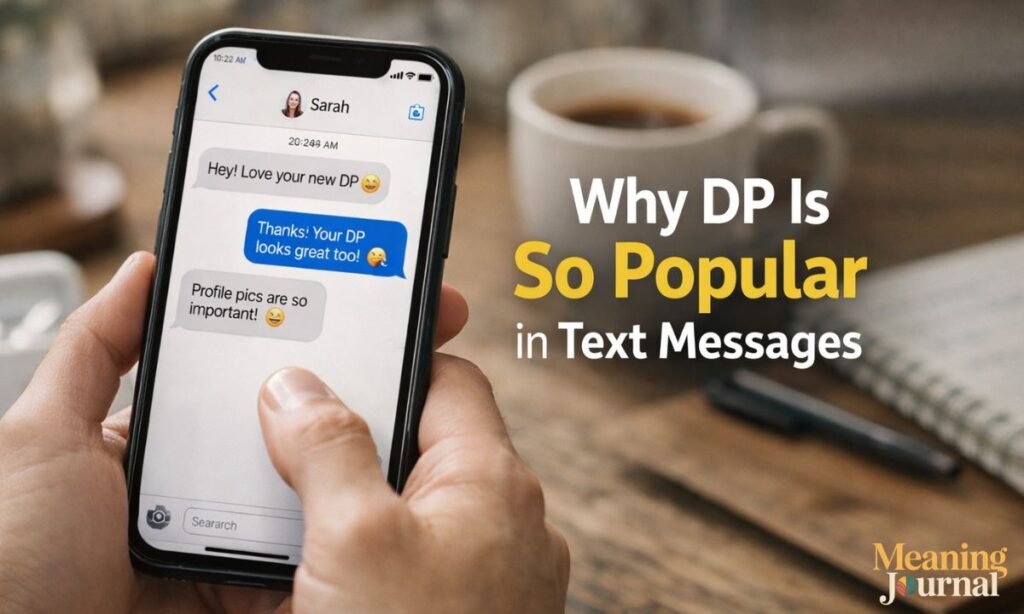
Several factors explain why DP became such a widely used abbreviation:
- Speed — It saves time compared to typing “display picture” or “profile picture.”
- Platform history — MSN Messenger and Orkut popularized the term in the early 2000s, and it stuck.
- Regional usage — DP is especially dominant in South Asian and African countries where WhatsApp is the primary messaging app.
- Social habit — Commenting on someone’s DP is a built-in social behavior on messaging platforms, reinforcing frequent use of the term.
- No official alternative — Unlike “selfie” which replaced older terms, “DP” has never been successfully replaced by a shorter universal term.
DP vs Profile Picture: Is There a Difference?
Technically, no. Both terms refer to the same thing — the image that visually represents you on a platform.
| Term | Origin | Common Usage |
| DP (Display Picture) | Early 2000s messaging apps | Casual texting, WhatsApp, South Asia/Africa |
| Profile Picture | Facebook terminology | Universal, formal and informal |
| PFP | Twitter/Reddit culture | Gen Z, gaming, social media |
| Avatar | Gaming/Discord culture | Gaming communities, anonymous platforms |
The choice of term often reflects which platform you grew up using or where you’re most active. Older internet users from the MSN Messenger era tend to say DP; those who got online during the Facebook era often say “profile picture”; younger Gen Z users on Twitter or Reddit might say “PFP.”
Real-Life Examples of DP in Text
Here are realistic conversation snippets to show exactly how DP is used:
Example 1 – Compliment:
Sara: OMG your new DP is everything! Hina: Haha thanks, took it last weekend
Example 2 – Curiosity:
Ahmed: You removed your DP? Everything okay? Ali: Yeah just wanted a blank one for a while
Example 3 – Suggestion:
Fatima: You should dp that pic from last night, you look so good! Noor: Really? I was thinking the same thing lol
Example 4 – Observation:
Zara: She changed her DP again… Ayesha: Third time this week 😂
Can DP Be Used Alone?
Yes, absolutely. “DP” works perfectly as a standalone word in text. You can say “Nice DP” without any additional context and the recipient will understand what you mean. It can also work as a verb in informal usage:
- “You should dp that photo.” (meaning: set that as your display picture)
- “I’m going to dp this sunset shot.”
This verb form is more common among younger users who are very comfortable with internet slang.
How to Reply When Someone Talks About Your DP
Knowing how to respond keeps the conversation smooth and natural:
- If it’s a compliment → “Thank you! Took it last weekend.” / “Haha glad you noticed!”
- If they’re asking why you changed it → “Just felt like a change!” / “That one was too old.”
- If they suggest a photo → “Oh I love that idea!” / “Good call, might dp it!”
Common Mistakes People Make with DP
Even people who know what DP means make a few common errors:
- Using it in formal settings — Saying “Please send me your DP” in a professional email sounds unprofessional. Use “profile photo” instead.
- Assuming negative intent — Sometimes people panic when they see “DP” in a text, assuming it means something inappropriate. In everyday chat, it almost always means Display Picture.
- Confusing DP with PFP — These terms are largely interchangeable, but PFP is more common on Twitter/X and gaming platforms, while DP dominates WhatsApp conversations.
- Ignoring context — In financial or technical discussions, DP does not mean Display Picture. Always read the full message.
DP Meaning for Beginners
If you’re just getting started with social media slang, here’s your quick beginner’s cheat sheet:
- DP = Display Picture (your profile photo)
- It’s used on WhatsApp, Instagram, Facebook, Telegram, and more
- Saying “Nice DP” = complimenting someone’s profile photo
- “Change your DP” = update your profile image
- It’s safe, casual, and widely understood
That’s really all you need to know for 99% of everyday conversations.
Why Understanding Text Slang Matters Today
Digital communication has its own language — one that evolves faster than any dictionary can keep up with. Abbreviations like DP, PFP, BRB, LOL, and hundreds of others are used billions of times a day across messaging platforms.
Understanding text slang is no longer optional. It helps you:
- Communicate effectively with friends, family, and colleagues
- Avoid misunderstandings that can happen when you misinterpret an abbreviation
- Feel confident navigating platforms like WhatsApp, Instagram, and Telegram
- Stay relevant in a digital world that constantly adopts new language
Missing out on basic slang like DP can make you feel left out of conversations — or worse, lead to misinterpretations that cause unnecessary confusion.
Expert Insight on Modern Text Language
Language experts and digital communication researchers note that abbreviations like DP reflect a broader trend: language adapts to the medium it’s used in. Just as telegrams birthed a shorthand style, and radio created specific broadcast language, mobile messaging has produced a new layer of conversational shorthand.
DP is a perfect example. It began as a practical label for a technical feature (display picture), got shortened for convenience, spread through user behavior, and is now so deeply embedded in digital culture that most users don’t even think about what it stands for — they just use it.
This is how language evolves: through use, repetition, and shared understanding.
Frequently Asked Questions
What does DP mean in text messages?
DP in text means Display Picture — the profile photo that represents you on social media and messaging apps like WhatsApp and Instagram.
Is DP the same as profile picture?
Yes, essentially. Both refer to the image on your profile. “DP” is the informal short form, while “profile picture” is the official term used by most platforms.
Can DP mean something else?
Yes. In finance, DP means Down Payment. In tech, it can mean Data Processing or Dynamic Programming. In adult contexts, it carries different meanings — but in everyday social media chat, it almost always means Display Picture.
Is DP appropriate to use with everyone?
In casual conversations about social media, yes — it’s perfectly appropriate. Avoid using it in formal or professional communication; say “profile picture” instead.
Why do people comment on DP?
Commenting on someone’s DP is a common form of social engagement. It’s a way to acknowledge a change, offer a compliment, or spark a conversation — especially when someone updates their profile photo.
Conclusion
So, what does DP mean in text? The answer is simple: Display Picture — your profile photo on social media and messaging apps.
It’s a term born in the early days of internet messaging, carried forward by billions of WhatsApp and Instagram users, and now firmly part of everyday digital language. Whether someone’s complimenting your photo, asking why you changed it, or just mentioning it in passing, the meaning is almost always the same.
Now that you know the full story — where it came from, how it’s used, and where it fits across different platforms — you can use and interpret “DP” with complete confidence in any conversation.
And if someone ever says “Nice DP,” you’ll know exactly what they mean — and how to reply.

Matt Henry is a writer with 4 years of experience in researching and explaining the meanings of words, names, and phrases. He is passionate about language and enjoys exploring the origins and true meanings behind everyday terms.