

You see it pop up in a message. Just three letters. “Wut.” No question mark, no context, no explanation. And suddenly you are the one confused, wondering if your friend is okay, joking, or slowly losing their mind. You are not alone. Wut meaning in text confuses thousands of people every day, and this guide will clear it all up in plain, simple English.
What Does Wut Mean in Text?
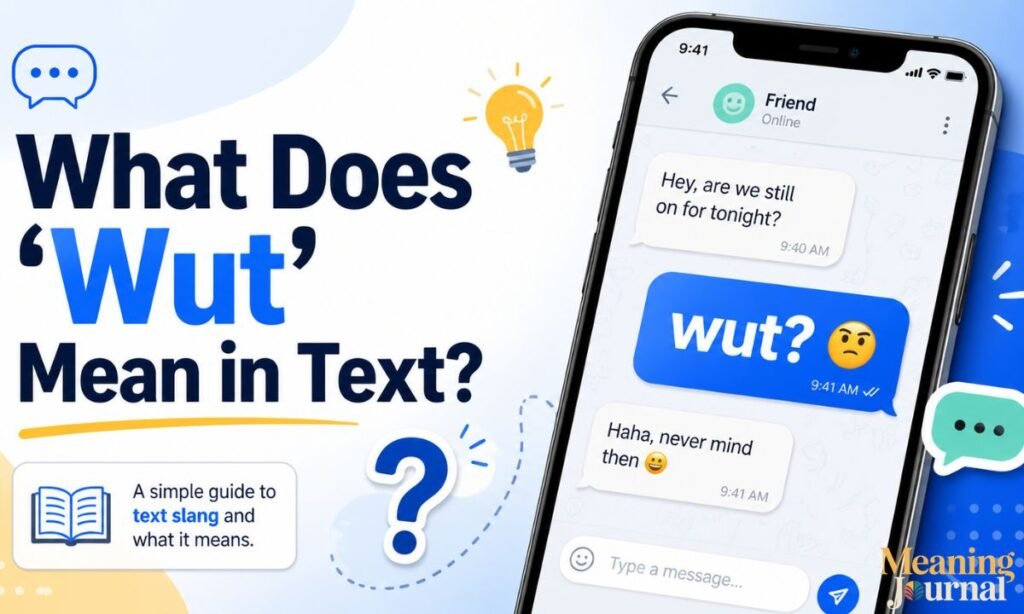
Wut is an informal, intentional misspelling of the word “what.” In text conversations, it is used to express surprise, confusion, disbelief, or playful shock. When someone sends you “wut,” they are basically saying “what?” but with extra attitude, humor, or emphasis baked right in.
Think of it as “what” wearing a silly hat. Same meaning, different vibe.
Why Do People Spell It “Wut” Instead of “What”?
This is where it gets interesting. People do not accidentally type “wut.” They do it on purpose. The misspelling is the whole point.
When someone writes “what,” it sounds neutral and normal. When someone writes “wut,” it carries a dramatic, exaggerated, almost comedic reaction. The weird spelling signals that the person is not just mildly confused. They are genuinely stunned, playfully shocked, or finding the whole thing ridiculous.
It is the text version of doing a double take.
The Origin of “Wut”: Where Did It Come From?
Wut did not appear overnight. It grew out of early internet culture, particularly from online forums, gaming communities, and chat rooms in the early 2000s. Back then, typing fast and skipping proper spelling was not laziness. It was a style.
Words like “ur,” “cya,” “lol,” and “wut” became the building blocks of internet language. These shortcuts spread from AOL Instant Messenger to MySpace, then to Twitter, Tumblr, and eventually every messaging app you use today.
“Wut” stuck around because it does something clever: it makes a simple word feel funnier and more expressive just by changing two letters.
Wut vs. What vs. Wat: What Is the Difference?
You might have noticed people using “what,” “wut,” and “wat” in different situations. They look similar but they carry slightly different energies. Here is a quick breakdown:
| Word | Tone | Best Used When |
| What | Neutral, formal | Normal questions, professional chats |
| Wut | Playful, surprised, casual | Funny moments, texting friends |
| Wat | Confused, meme-style, chaotic | Reacting to something absurd or weird |
All three mean the same thing at the core. But the spelling tells the reader exactly how you feel about what you just read.
How “Wut” Is Actually Used in Real Conversations
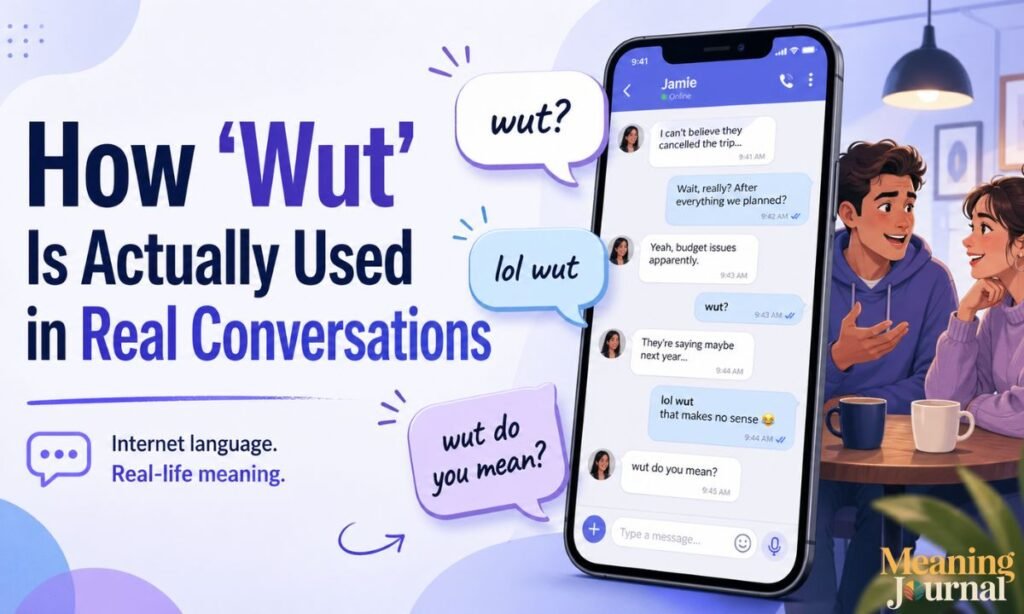
Seeing it in action makes everything clearer. Here are some natural, real-life examples:
Example 1: Friend: I just ate an entire pizza and then went for a run. You: Wut.
Example 2: Friend: My cat learned how to open the fridge. You: Wut?? How??
Example 3: Friend: I think pineapple belongs on pizza AND in pasta. You: Wut are you even saying right now
In each case, wut is doing the heavy lifting. It shows the reaction without needing a full sentence. That is the beauty of it.
Does “Wut” Have Any Historical or Cultural Roots?
Interestingly, intentional misspelling as a form of expression is not new at all. Even in medieval manuscripts, scribes would sometimes alter spellings for stylistic or phonetic reasons. Language has always been flexible, creative, and shaped by the people using it.
In more recent history, dialect writing in literature used non-standard spellings to reflect how people actually spoke. Think of classic American authors who wrote characters speaking in regional dialects. “Wut” follows the same tradition: it reflects a real sound and a real feeling, just in a digital format.
So while it looks like internet chaos, it actually has roots in something very human: the desire to make language feel alive.
Common Mistakes People Make with “Wut”
Even a three-letter word can be misused. Here are the biggest mistakes people make:
Using it in professional settings. If you send “wut” to your boss or a client, it will not land well. Save it for people you are genuinely comfortable with.
Overusing it. If every single thing surprises you enough to say “wut,” it loses all impact. Use it when the reaction is real and the moment is right.
Confusing it with rudeness. Some people read “wut” as dismissive or sarcastic. Know your audience. With close friends, it is funny. With someone sensitive, it might feel harsh.
Forgetting the context. “Wut” works best as a reaction. Starting a conversation with just “wut” out of nowhere can genuinely confuse people.
Which One Should You Use: Wut, What, or Wat?
Here is the simple rule:
Use “what” when you need to be clear, polite, or professional. Use it in emails, work messages, and conversations with people you do not know well.
Use “wut” when you want to show playful surprise or humor with friends. It is warm, funny, and casual.
Use “wat” when something is so bizarre it breaks your brain. It has a stronger meme energy and works best in group chats or social media comments.
When in doubt, “what” is always safe. “Wut” is always fun. “Wat” is for when reality stops making sense.
Is “Wut” Rude or Disrespectful?
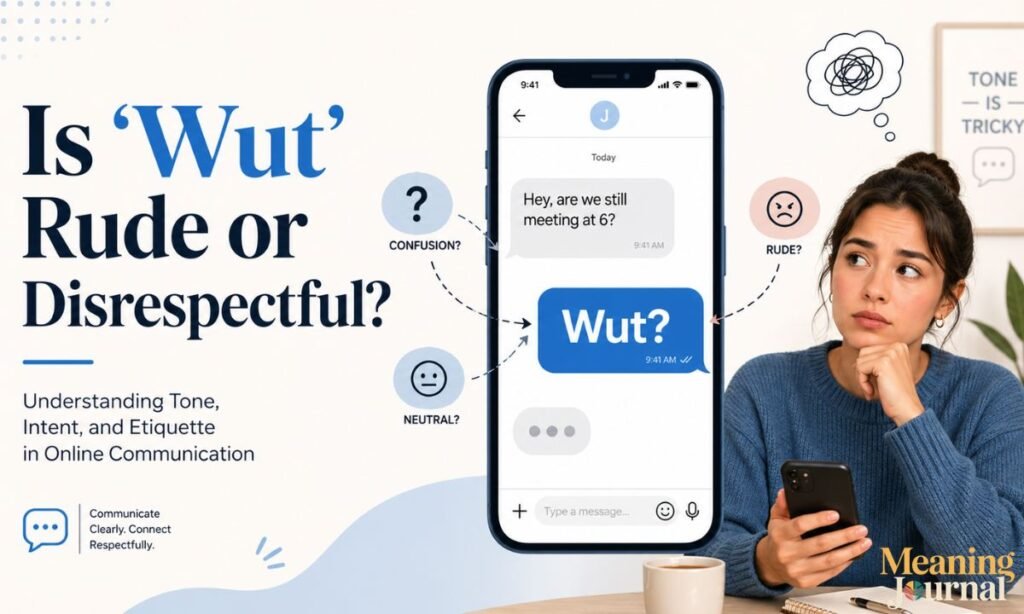
Not by itself. Wut is generally lighthearted and playful. The tone depends heavily on context and relationship. Between close friends, it signals humor and relatability. In the wrong setting, it can come across as dismissive.
The golden rule: if you would not say “WHAT?!” dramatically out loud in that situation, do not send “wut” in text either.
Other Slang Words That Work Like “Wut”
If you are getting familiar with wut, you will probably run into these cousins too:
Huh means mild confusion or a request to repeat something. Less dramatic than wut.
Bruh expresses disbelief, disappointment, or exasperation.
No way is a more complete version of wut, used when something is hard to believe.
Say what is the more conversational, slightly older cousin of wut.
All of these share the same DNA: they are quick emotional reactions compressed into just a word or two.
Frequently Asked Questions
Is “wut” an actual word?
Not in the dictionary, but in internet language it is completely established. Most people who text regularly know exactly what it means.
Can I use “wut” in casual emails?
Only if you know the person very well and the email tone is already informal. In any professional context, stick with proper spelling.
Does “wut” mean the same thing in every country?
Yes. Because it comes from English internet culture, it carries the same meaning across English-speaking communities worldwide.
The Bottom Line on Wut Meaning in Text
Wut is one of those tiny words that carries a lot of personality. It is playful, expressive, and perfectly designed for the fast pace of texting and online conversation. At its core, it just means “what”, but with a raised eyebrow and a grin attached.
Now that you know exactly what it means, where it came from, and how to use it without embarrassing yourself, you are fully equipped. Next time someone sends you a “wut,” you can confidently send one right back.
And if none of this made sense? Well. Wut.
