

TB shows up constantly across texts, Instagram captions, and Snapchat replies, and it rarely means the same thing twice. Sometimes it’s a nostalgic caption under an old photo. Sometimes it’s a friend asking you to reply. Occasionally it’s a quick, half-sarcastic reaction to bad news. Because the letters stay the same while the meaning shifts, TB is one of the more genuinely confusing pieces of texting shorthand still in wide use.
This guide breaks down every common meaning of TB, where each one came from, how it changes depending on the app you’re using, and how to reply without guessing wrong. It also covers the medical meaning of TB, since that’s the definition most dictionaries still list first and the one most likely to cause a mix-up.
TB Mean in Text – Quick Meaning
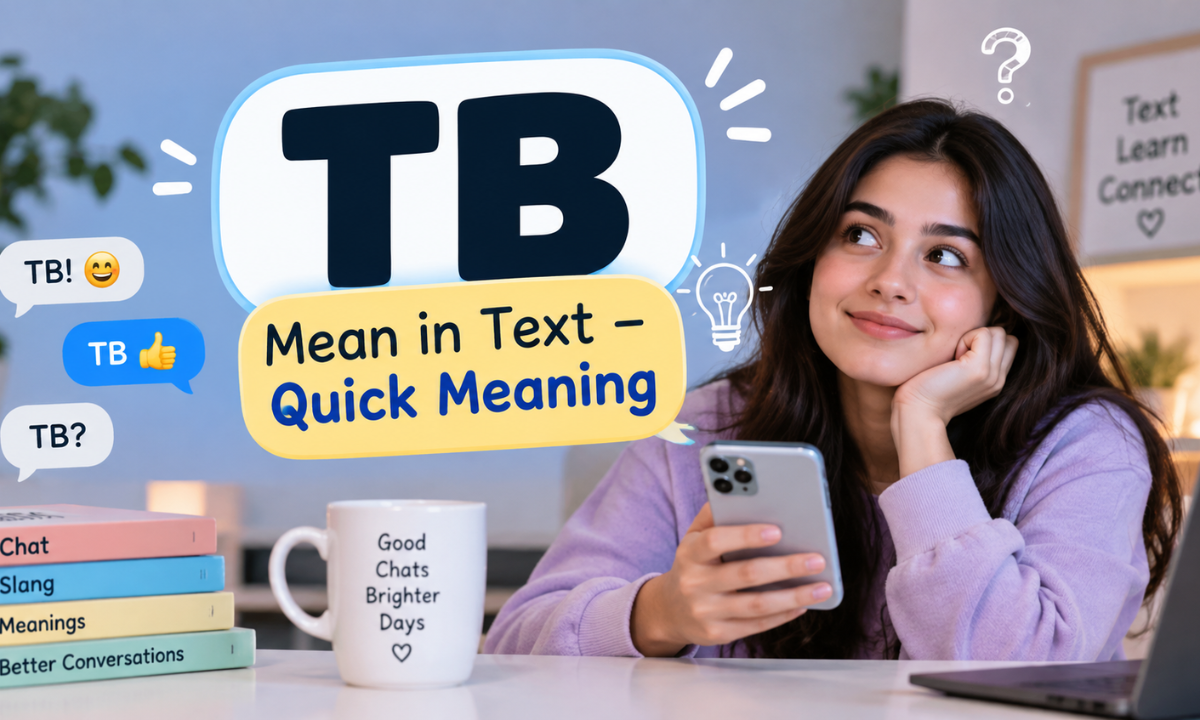
TB most commonly stands for one of two things: “Throwback” or “Text Back.” Throwback refers to an old photo, memory, or moment from the past, usually shared with a nostalgic or sentimental tone. Text Back is a short nudge asking someone to reply to a message they haven’t answered yet.
- “tb to this trip, I miss everyone in this photo” — Throwback, sharing an old memory.
- “hey, tb when you get a sec” — Text Back, asking for a reply.
- “lost my keys again… tb” — Too Bad, a quick sympathetic or sarcastic reaction.
A less common third meaning, “Too Bad,” pops up as a brief reaction to disappointing news, and an even rarer fourth, “To Be,” appears mostly in short phrases like “tb confirmed.” Outside of texting, TB is also the standard medical abbreviation for tuberculosis, which has nothing to do with any of the slang meanings above. Context, meaning the platform, the sentence around it, and who sent it, is what tells you which TB you’re looking at.
Origin & Background of TB in Digital Culture
The two dominant meanings of TB developed along separate paths and only later collided into the same two letters.
“Text Back” is the older of the two in spirit. It grew out of basic SMS-era shorthand, back when every character counted on a flip-phone keypad and abbreviating a common phrase like “text me back” into three letters simply saved time. It never needed a cultural moment to take off; it was always just a practical shortcut.
“Throwback” has a much more specific origin story. It’s tied directly to the rise of Throwback Thursday, known online as #TBT, a hashtag trend where users posted old photos on Thursdays as a form of nostalgia. As the trend spread across Instagram and Twitter in the early 2010s, “TB” split off as a standalone shorthand that people used any day of the week, not just Thursdays, whenever they wanted to reference something from the past. Wiktionary documents this exact usage, defining “tb” as an abbreviation of “throwback” used specifically in internet slang and text messaging.
Cambridge Dictionary, Oxford Advanced Learner’s Dictionary, and Dictionary.com do not currently carry standalone slang entries for “tb.” Wiktionary is the only major reference source with a documented entry for the throwback sense, which is worth knowing if you go looking for a formal definition and come up empty elsewhere.
Real-Life Conversations Using TB
Seeing TB in context usually clears up the meaning faster than any definition can.
- Friend: “tb to freshman year when we thought we were so cool 😭” — clearly Throwback, paired with an old memory.
- Partner: “busy in a meeting, tb when you’re free” — clearly Text Back, a low-pressure request for a reply.
- Group chat: “just found out the concert got cancelled” / “tb 😔” — Too Bad, a quick sympathetic reaction.
- Coworker, informal Slack thread: “sent you the file, tb once you’ve reviewed it” — Text Back, used in a semi-casual work context.
TB Meaning in Text: Funny Examples
TB gets genuinely playful when people lean into the awkward or embarrassing side of nostalgia, or when they use “Too Bad” with obvious sarcasm rather than real sympathy.
- “tb to when I thought this haircut was a good idea 💀”
- “you missed the free pizza in the break room” / “tb for you 😂”
- “tb to me confidently mispronouncing ‘quinoa’ in front of my entire class”
Emotional & Psychological Meaning of TB
Both major meanings of TB do more emotional work than their three letters suggest. As Throwback, TB gives people a low-effort way to express nostalgia without writing out a full, sometimes vulnerable sentence about missing a person, a place, or a moment. Posting “tb to this” under an old photo lets someone signal that a memory matters without spelling out exactly why.
As Text Back, TB functions as a soft, non-confrontational nudge. It communicates urgency without sounding demanding, which is part of why it works so well between people who already have an established, casual relationship. A bare “tb” from someone you don’t know well can read as more abrupt than intended, simply because there’s no established tone to soften it.
Also Read This: MHM Meaning in Text: What Does MHM Mean in Chat & Social Media? (2026)
Usage of TB in Different Contexts
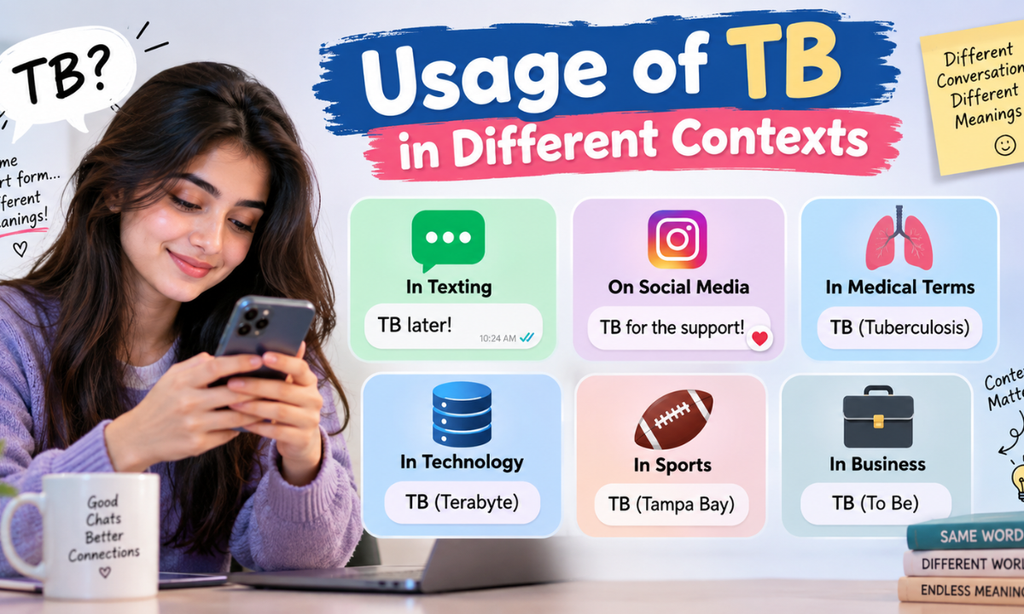
Which meaning of TB you’re looking at often depends heavily on the app it showed up in.
- Instagram: Throwback dominates here by a wide margin. It’s the direct successor to #TBT, showing up constantly in captions and comments under old photos.
- Snapchat: Both meanings are common. Streaks and fast-moving chats push people toward Text Back as a quick reply nudge, while Snapchat Memories resurfacing old photos pushes people toward Throwback captions.
- WhatsApp: Leans toward Text Back, since the app is built around ongoing back-and-forth conversation rather than public posting, though Throwback still appears when old photos get shared in family or friend group chats.
- TikTok: Both meanings show up, most often Throwback in captions referencing an old trend, sound, or era, and occasionally Text Back in comment replies or DMs.
- Regular texting/iMessage: Text Back is the most common meaning by far, usually appearing as a short, casual follow-up nudge.
When NOT to Use TB
TB is casual by design, which makes it a poor fit in certain settings:
- Formal emails or messages to a manager, client, or someone you’ve just met.
- Any message where clarity matters more than speed, since “too bad” in particular can easily be misread as dismissive.
- Conversations with people who may not be familiar with texting shorthand, including older relatives or new professional contacts.
- Medical or health-related conversations, where TB could be misread as referring to tuberculosis rather than any slang meaning.
Common Misunderstandings About TB
The biggest source of confusion isn’t the slang itself, it’s the overlap between slang and non-slang meanings of the same two letters.
- Assuming TB always means one thing. It commonly covers at least three distinct casual meanings: Throwback, Text Back, and Too Bad, plus the far less common “To Be.”
- Confusing TB with TBT. They’re related but not identical; TBT specifically nods to the Throwback Thursday trend, while TB is a more general, day-agnostic shorthand.
- Missing the medical meaning entirely. Outside of texting, TB is the standard abbreviation for tuberculosis, an infectious lung disease. In a health-related message or a doctor’s note, this is almost certainly the intended meaning, not any slang sense.
- Reading “too bad” as automatically rude. Depending on tone and emoji, it can express genuine sympathy just as easily as sarcasm.
TB vs Similar Expressions – Comparison Table
| Term | Meaning | Typical Use |
| TB | Throwback, Text Back, or Too Bad | General-purpose, meaning shifts by context and platform |
| TBT | Throwback Thursday | Specifically tied to Thursday nostalgia posts, though now used any day |
| TBH | To Be Honest | Prefacing an honest or blunt opinion |
| NVM | Never Mind | Dropping a topic or withdrawing a previous message |
| TB (medical) | Tuberculosis | Health and medical contexts only, unrelated to slang |
Variations and Related Forms of TB
A handful of related shorthand terms build directly on TB:
- TBT — Throwback Thursday, the original hashtag trend that TB grew out of.
- #tb — the hashtag form, used almost exclusively for the Throwback meaning in captions.
- tb rn — “text back right now,” a more urgent version of the standard Text Back nudge.
- tb soon — a softer, less urgent version of the Text Back request.
How to Respond When Someone Uses TB
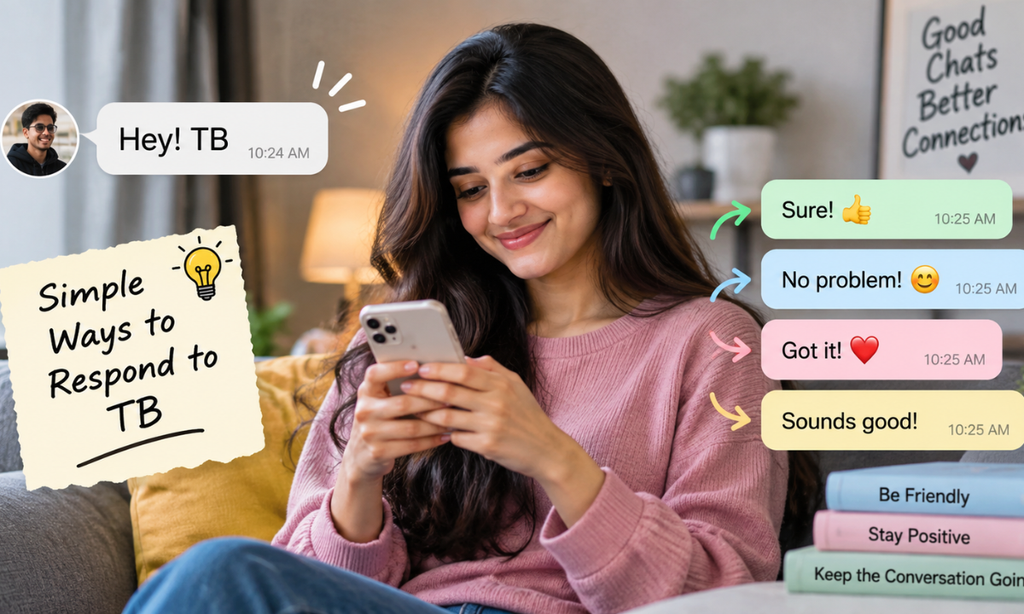
Figuring out how to reply starts with figuring out which TB you’re dealing with.
- If it’s paired with an old photo or a memory, it’s Throwback, and a comment about the memory itself, not a literal reply request, is what’s expected.
- If it’s a short message with no photo attached, especially after you’ve gone quiet in a conversation, it’s almost always Text Back, and a quick reply is the appropriate response.
- If it follows bad news or a complaint, it’s likely Too Bad, and a brief acknowledgment or matching tone works best.
- If you’re genuinely unsure, a quick “tb as in…?” clears it up faster than guessing.
Regional & Cultural Usage of TB
TB is used broadly across English-speaking internet culture rather than being tied to one specific region. That said, usage skews generational more than geographic. Gen Z users lean more heavily toward the Throwback sense, largely because it’s baked into how Instagram and TikTok captions work. Older Millennials tend to use TB more often in its Text Back sense, closer to its original SMS-era roots.
Across regions, the “Too Bad” meaning stays the least common of the three and tends to show up more in North American and UK casual texting than elsewhere.
Is TB Safe for Kids?
As slang, TB itself is harmless. It doesn’t carry sexual, violent, or otherwise inappropriate meaning in any of its common uses, and it’s about as benign as texting abbreviations get.
The one thing worth keeping in mind for parents is context rather than the term itself: Throwback posts often involve sharing old photos publicly, which is a good moment to talk with kids about what’s appropriate to post and who can see it. Text Back nudges, especially repeated ones, can also create low-level social pressure to reply immediately, which is worth a conversation if it starts to feel constant rather than casual.
Conclusion
TB packs a surprising amount of ambiguity into two letters. Most of the time, it means “Throwback,” a nostalgic nod to an old photo or memory, or “Text Back,” a casual nudge for a reply. Less often, it means “Too Bad,” and outside of texting entirely, it’s also shorthand for tuberculosis in medical contexts.
None of that needs to be confusing once you know to check the platform, the sentence around it, and who sent it. Read those three things together, and TB stops being a guessing game and starts making sense every time.
