



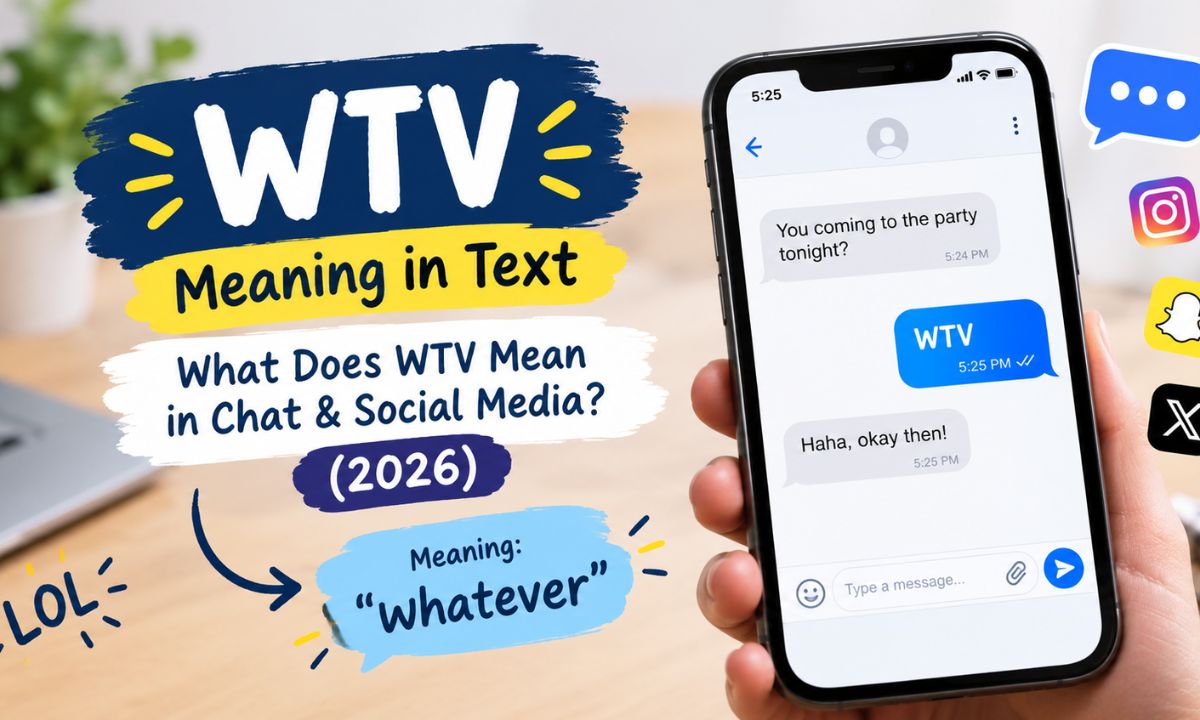
WTV is one of those abbreviations that looks simple until someone sends it to you mid-conversation and you’re not sure if they’re annoyed, relaxed, or just typing fast. In almost every case, WTV stands for “whatever,” used the same way you’d use the spoken word: to show indifference, agreement without enthusiasm, or a desire to move on from a topic.
But three letters carry a lot of weight in a text thread. The same “wtv” can read as chill and easygoing in one conversation and cold or dismissive in another, depending on punctuation, timing, and what came before it. This guide breaks down what WTV means, where it came from, how it shows up across different platforms, and how to reply to it without misreading the tone.
What Does WTV Mean in Text & Chat?
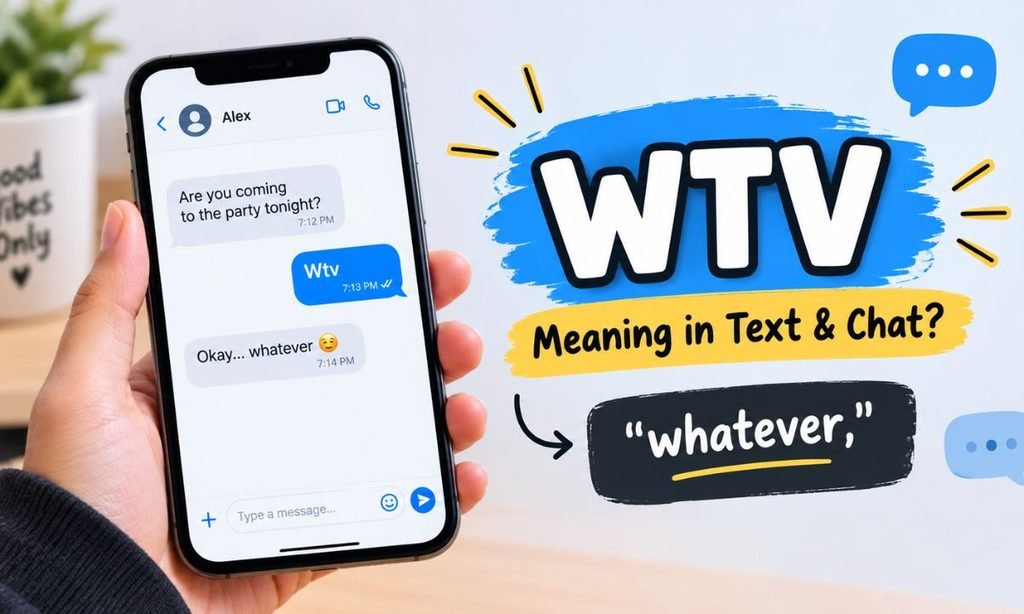
In texting and chat apps, WTV is shorthand for “whatever.” It’s used to express a lack of strong preference, mild annoyance, or simple agreement to move forward without debate. Someone might type it when they genuinely don’t care which restaurant you pick, or when they’ve decided a conversation isn’t worth continuing.
What Does WTV Mean in a Text From a Friend?
Between friends, WTV is usually low-stakes. It shows up when deciding on plans (“wtv works for me”), reacting to gossip they’re not invested in, or brushing off a minor disagreement. Context and history with that friend matter more than the word itself — a close friend’s “wtv” rarely means anything more than genuine flexibility.
What Does WTV Mean From a Girl or Guy in Text?
WTV doesn’t carry a different dictionary meaning depending on who sends it, but tone often reads differently based on the relationship and the conversation leading up to it. A single “wtv” with no punctuation or follow-up, from anyone, tends to land as more dismissive than one paired with an emoji, a laugh, or a next sentence. If you’re trying to figure out whether it’s frustration or genuine indifference, look at what was said right before it rather than who sent it.
How to Respond to WTV in Text?
The right reply depends on what you think the “wtv” actually meant:
- If it seems genuinely relaxed: match the energy with something like “cool, I’ll decide then” or “sounds good.”
- If it seems dismissive or annoyed: ask directly, such as “did I say something wrong?” rather than guessing.
- If it ends an argument: give it space instead of pushing for an immediate resolution — a flat “wtv” is often someone’s way of stepping back, not inviting a longer debate.
- If it’s playful: a joke or an emoji back usually keeps the tone light.
Full Form, Stands For & Short Meaning of WTV
WTV = Whatever. It’s a direct letter-shortening of the word, dropping the vowels the way many texting abbreviations do to save keystrokes. WTV is essentially the typed version of “whatev,” a casual spoken shortening of “whatever,” and is read the same way. There’s no deeper acronym behind it in casual texting; it’s simply a fast way to type a word people already say constantly out loud.
Origin, History & First Known Use of WTV
“Whatever” itself has been a catch-all expression of indifference in English for decades, well before texting existed. WTV picked up steam as messaging apps grew, gaining more use with the rise of WhatsApp around 2009 and Snapchat around 2011, then spreading further through TikTok and other platforms. Early SMS plans with strict character limits pushed users to shorten common words, and “whatever” — already a high-frequency word in everyday speech — was an obvious candidate for trimming.
Urban Dictionary entries for “wtv” date back to the mid-2000s, tracking closely with the broader wave of texting acronyms (idk, tbh, smh) that emerged from that same character-saving habit. By the 2010s it had settled into mainstream texting vocabulary rather than staying confined to any one online subculture.
How People Use WTV in Daily Conversations
WTV shows up constantly in everyday digital life, and its function usually falls into one of a few categories:
- Deciding on plans without a strong preference (“wtv you want to do”)
- Ending a disagreement without conceding the point
- Reacting to news or gossip with low emotional investment
- Signaling boredom or disengagement from a topic
- Combining with other slang, such as “down for wtv” (open to anything) or “wtv atp,” which pairs “whatever” with “at this point” to signal someone has reached the end of their patience with a situation
Find Out More: WSP Meaning in Text 2026: What Does WSP Mean & How to Use It?
WTV Meaning Across WhatsApp, Instagram, TikTok & Snapchat
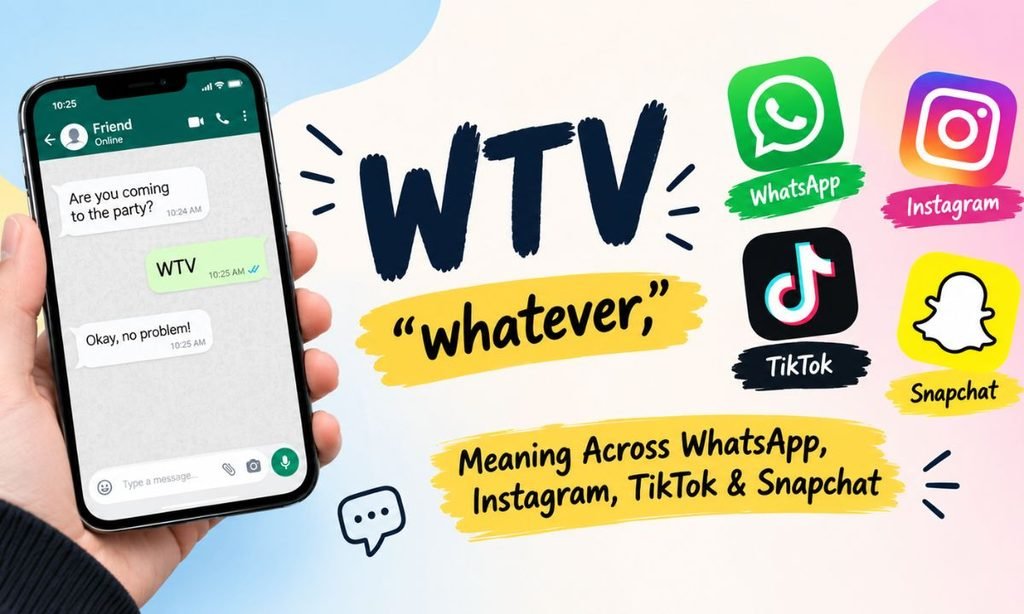
The core meaning of WTV doesn’t change by platform, but the typical context around it does.
WTV on WhatsApp
On WhatsApp, WTV usually appears in group chats or one-on-one threads when finalizing plans or reacting to a message someone doesn’t feel strongly about. Because WhatsApp conversations often mix casual and semi-important topics, tone here can be trickier to read than on purely casual apps.
WTV on Instagram
On Instagram, WTV shows up in DMs and comment replies, often reacting to a post, a joke, or light drama in the comments. It’s rarely used in captions themselves, since captions tend to be more curated than replies.
WTV on TikTok
TikTok comment sections use WTV to brush off disagreements about a video’s take or to show mock indifference as part of a joke. Gamers and younger users also carry the term into voice and text chat during matches, often to show flexibility rather than genuine frustration — “wtv, let’s queue” is a common example.
WTV on Snapchat
On Snapchat, WTV almost always means “whatever,” and friends commonly use it in quick back-and-forth chats or streak conversations where fast, low-effort replies are the norm.
Different Meanings of WTV in Other Fields
Outside of texting, “WTV” occasionally appears as a business name, station call sign, or acronym in specific industries (for example, some regional TV or broadcast station names use “WTV” as part of their call letters). These uses are unrelated to the slang meaning, and context makes the distinction obvious — nobody confuses a TV station’s call sign with a text message.
Does WTV Mean “What’s the Vibe”?
Occasionally, particularly in usage that appears to trace back to New York, WTV gets used to mean “what’s the vibe” — essentially a casual “what’s up” or a check on the mood of a place or group. This reading is far less common than “whatever” and isn’t well documented beyond scattered slang-dictionary entries, so it’s worth knowing it exists but not assuming it’s the default meaning. If the surrounding conversation is about plans, mood, or checking in on an event, “what’s the vibe” is possible; in nearly every other context, “whatever” is the safe read.
Common Confusions, Mistakes & Wrong Interpretations
- Assuming it’s always negative — WTV is frequently neutral or genuinely flexible, not automatically angry or dismissive.
- Reading too much into a bare “wtv.” — no punctuation and no emoji can look colder than intended, especially from someone who just types that way normally.
- Treating it as offensive — it isn’t profanity or a slur; at most it can come across as curt.
- Assuming everyone interprets it the same way — older or less terminally-online recipients may take it more personally than a younger, chronically-texting audience would.
- Confusing it with WTVR (“whatever,” spelled out slightly differently) or unrelated look-alike acronyms from gaming or broadcast contexts.
Similar Terms, Alternatives & Related Slang
| Term | Full Form | Tone |
| WTV | Whatever | Casual, can be neutral or mildly dismissive |
| IDC | I Don’t Care | Blunter, less flexible-sounding |
| WYL | Whatever You Like | Warmer, more accommodating |
| WTVR | Whatever | Same meaning as WTV, less common |
| NVM | Never Mind | Softer dismissal, often self-directed |
| K | Okay | Can carry similar cold, one-word energy |
Examples of WTV in Real Chat Situations
- Friend: “Movie or bowling tonight?” You: “wtv, both sound fun”
- Group chat drama: “Did you hear what she said?” You: “wtv, not getting involved”
- After a small argument: “Fine, do it your way.” Reply: “wtv.”
- Gaming voice chat: “Lost that round, my bad.” Teammate: “wtv, let’s just queue again”
- Deciding on food: “Pizza or tacos?” You: “wtv you’re craving, I’m easy”
Is WTV Still Popular? Trends & Online Usage

WTV remains a common fixture in texting and comment sections in 2026, particularly among Gen Z and younger Gen Alpha users who grew up with abbreviation-heavy messaging apps.
It hasn’t faded the way some short-lived slang does, largely because “whatever” itself is a permanent fixture of casual English — the abbreviation just rides along with the word’s ongoing everyday use rather than depending on a trend cycle. Expect it to keep showing up in fast, casual digital conversation rather than disappearing anytime soon.
Frequently Asked Questions
What does WTV mean in a text?
WTV stands for “whatever,” used to show indifference, casual agreement, or a wish to move past a topic.
Is WTV rude?
Not inherently — it can read as neutral or even friendly, though a bare “wtv” with no context can come across colder than intended.
Does WTV mean something different from a girl or a guy?
No, the meaning stays the same regardless of who sends it; tone depends on context and relationship, not gender.
Can WTV mean anything besides “whatever”?
Rarely, it’s used to mean “what’s the vibe,” though this is far less common and not well documented outside a handful of slang sources.
Is it okay to use WTV in professional messages?
No, it’s strictly casual slang and should be avoided in work emails or messages to anyone outside your close social circle.
Conclusion
WTV is a simple abbreviation with a simple core meaning: whatever. Its real complexity comes from tone, not definition — the same three letters can sound relaxed, bored, annoyed, or genuinely flexible depending on punctuation, timing, and the conversation around it.
Once you’re reading it in context instead of taking it at face value, WTV stops being confusing and just becomes one more piece of everyday texting shorthand.
