

Ever received a message that just said “OTG, talk later” and had absolutely no idea what your friend meant? You’re not alone. Digital slang moves fast, and OTG is one of those terms that pops up constantly in chats, captions, and stories — yet a surprising number of people still misread it or confuse it with something else entirely.
Let’s break it all down, clearly and honestly.
So, What Does OTG Actually Mean in Text?
In everyday texting and online chat, OTG stands for “On The Go.”
That’s it. Simple, clean, and incredibly useful for modern life. When someone says they’re OTG, they’re telling you they’re currently moving, busy, out and about, or simply unavailable to have a proper conversation right now.
“Hey, can we talk?” → “OTG right now, I’ll call you when I’m home.”
It’s the digital equivalent of someone mouthing “I’m busy” across a crowded room. Fast, efficient, no explanation needed.
Where Did OTG Come From? A Quick Look at Its Origin
OTG didn’t appear overnight. The phrase “on the go” has existed in the English language for well over a century, used to describe people who are constantly active or in motion. Think of old newspaper headlines: “A meal for people on the go.”
The abbreviated form — OTG — started gaining traction in the early 2010s as smartphone use exploded and text-based communication became the dominant way people stayed in touch. As character limits mattered (hello, early Twitter and SMS) and typing on glass keyboards became a sport, shorthand like OTG naturally filtered into everyday language.
By the mid-2010s, it was a staple in informal digital conversations. By 2026, it’s practically second nature for anyone under 35.
How OTG Shows Up in Real Conversations
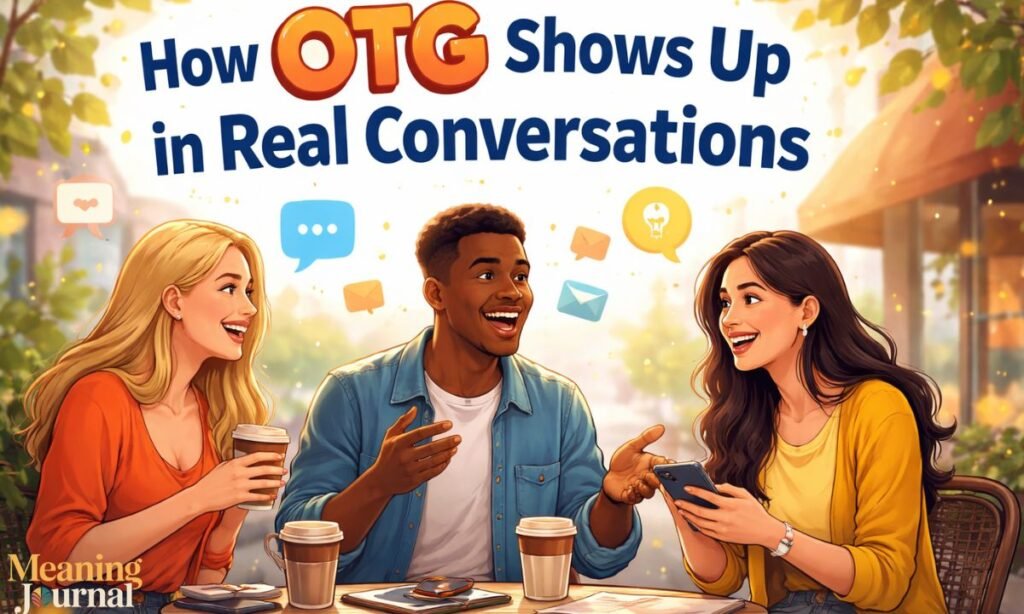
Here’s where it gets relatable. OTG isn’t just used in one type of situation — it stretches across dozens of everyday scenarios. Here are a few realistic examples:
Situation 1 — Declining a call:
“Can you hop on a quick call?” “Can’t right now, OTG. Give me an hour.”
Situation 2 — Explaining a slow reply:
“Why are you taking so long to reply???” “Sorry, been OTG all morning. What’s up?”
Situation 3 — Keeping someone posted:
“Where are you? We’re waiting.” “OTG, 10 mins away.”
Situation 4 — Casual Instagram story:
[Photo of coffee and a tote bag] Caption: “OTG ☕🏃♀️”
Notice how the tone shifts depending on the platform. In a direct message it’s explanatory; in a caption it’s almost a personality statement. That flexibility is exactly why OTG has stuck around.
“I’m OTG” — What That Specific Phrase Signals
When someone sends “I’m OTG” or “Im OTG,” the message carries a slightly more personal weight than just dropping “OTG” alone. It’s not just a status update — it’s a soft social signal.
It typically means one of three things:
- They want you to know they’re not ignoring you — they’re acknowledging your message but can’t engage properly.
- They’re wrapping up a conversation — it’s a polite way of saying this chat needs to pause.
- They’re setting an expectation — don’t expect a fast reply from me right now.
Understanding this helps you read the room properly. If someone says “I’m OTG,” the right response is usually brief and understanding — not a wall of follow-up texts.
OTG Across Different Platforms: WhatsApp, Instagram, TikTok & Snapchat
The way OTG is used shifts depending on the platform — and that’s worth knowing if you’re trying to understand it in context.
WhatsApp: OTG here is almost always practical. It’s used to explain availability, delay responses, or signal that a conversation needs to be picked up later. Very direct, very functional.
Instagram: You’ll see OTG in captions and stories more than in DMs. It often accompanies aesthetic photos of commutes, coffee cups, or busy streets. It’s part lifestyle label, part humble brag — I’m always moving, always doing something.
TikTok: In comments and bios, OTG can serve as a personality shorthand. Creators sometimes use it to explain inconsistent posting schedules. In comment sections, it shows up as a quick reaction when someone tags a friend about relatable “busy life” content.
Snapchat: Because Snapchat is built around real-time sharing, OTG fits naturally. It’s often sent alongside a blurry photo from a moving car or a selfie in transit. Context is visual, so the abbreviation fills in the verbal gap.
Same term, four different vibes.
OTG on Your Phone — The Other Meaning You Should Know
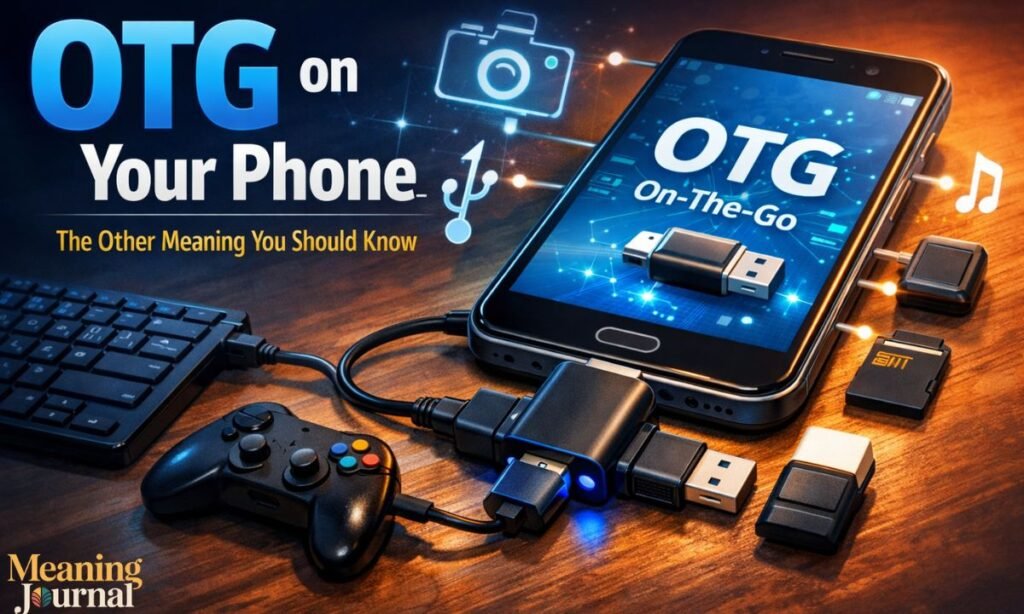
Here’s where things get interesting — and where a lot of confusion happens.
In the world of smartphones and tech, OTG has a completely different meaning: USB On-The-Go.
USB OTG is a technical standard that allows a mobile device — your phone or tablet — to act as a USB host. In plain language? It lets you plug things into your phone that you’d normally plug into a computer. A USB drive, a mouse, a keyboard, a card reader — all possible through a USB OTG adapter.
So if you search “OTG meaning on phone” and land on a tech article about adapters and data transfer, that’s not wrong — it’s just a completely different world using the same three letters.
The context makes all the difference. In a chat message, OTG = On The Go. In a phone settings article or Amazon product listing, OTG = USB On-The-Go.
Does OTG Mean “On The Game”? Clearing Up a Real Confusion
This question comes up more than you’d expect: does OTG mean “on the game”?
Short answer: not in mainstream usage, no.
“On the game” is a British slang expression with a very specific — and often adult-coded — connotation. It is not what OTG stands for in standard digital slang, and using OTG assuming that meaning in a casual conversation could lead to some genuinely awkward misunderstandings.
There’s also a gaming-adjacent interpretation some communities use where OTG loosely means “on the grind” (as in, actively playing or grinding in a game). But this is niche, platform-specific, and not a widely recognized definition.
Stick with “On The Go” as your default interpretation unless the context strongly suggests otherwise. You’ll be right 95% of the time.
The Confusion Zone: Common Mistakes People Make with OTG
Even simple slang gets misread. Here’s what trips people up most often:
Confusing it with USB OTG in conversation. If a non-tech friend says “I’m OTG,” and you respond asking about their adapter, that’s going to be a weird exchange. Context first, always.
Treating it as a sign of rudeness. Some people receive “OTG” and feel brushed off. In reality, it’s the opposite — someone is taking a second to acknowledge you rather than just leaving you on read. It’s a courtesy, not a cold shoulder.
Over-using it when it doesn’t apply. Using OTG when you’re actually just sitting at home avoiding a conversation… people notice. It loses meaning when it’s used as a blanket excuse rather than an accurate status.
Typing it as “otg” vs “OTG.” Neither version is wrong — both are completely understood. But in more formal-casual spaces (yes, that’s a thing), all-caps tends to read as more intentional and clear.
OTG vs. Similar Slang: How It Stacks Up
If you’ve picked up OTG, you’ve probably encountered its cousin abbreviations floating around the same conversations. They’re related, but they’re not interchangeable — and knowing the difference makes your texting sharper.
| Term | Full Form | What It Signals | When to Use It |
| OTG | On The Go | Currently busy/moving, may reply late | Mid-conversation status update |
| BRB | Be Right Back | Short absence, returning in minutes | Stepping away briefly |
| AFK | Away From Keyboard | Away from device, no ETA | Gaming or PC contexts mostly |
| GTG | Got To Go | Ending the conversation now | Wrapping up and leaving the chat |
| NRN | No Reply Needed | Informational message, no response expected | Sending info without starting a thread |
| IDK | I Don’t Know | Uncertainty about something | Responding to a question |
| Busy rn | Busy Right Now | Can’t talk at this moment | Informal, typed-out alternative to OTG |
The key difference between OTG and most of its alternatives? OTG is a state of being, not an action. You’re not leaving (GTG), not stepping away briefly (BRB), not unreachable (AFK) — you’re simply in motion, living your life, and the conversation will resume when the moment is right.
How to Respond When Someone Sends You OTG
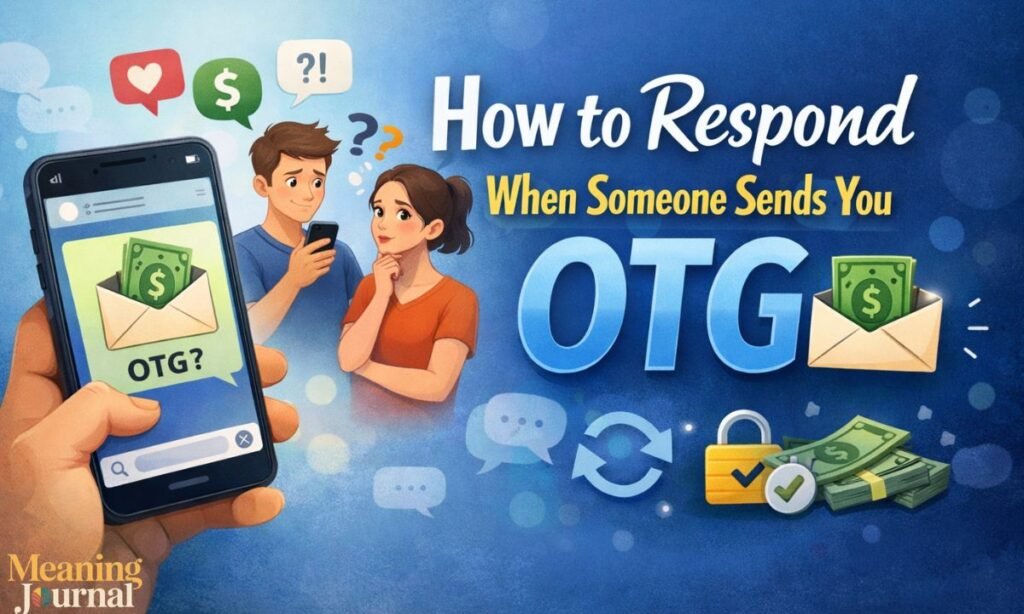
Getting an “OTG” message and not knowing how to reply is oddly common. The good news: there’s no complicated formula here.
If it’s a casual chat:
“No worries, catch you later!” or “Okay, lmk when you’re free”
If it’s time-sensitive:
“Got it — just let me know ASAP when you’re back, it’s kinda urgent”
If it’s a one-word reply situation:
“👍” — genuinely works fine
What you want to avoid is sending ten follow-up messages after someone tells you they’re OTG. They’ve told you they can’t engage right now. Respect the signal, and the conversation will pick up naturally when they’re available.
A Unique Angle Competitors Miss: OTG as a Personal Brand Signal
Here’s something almost no one talks about when covering OTG — and it’s worth mentioning because it reflects a genuine cultural shift.
For a growing segment of people, especially content creators, freelancers, and young professionals, OTG has evolved from a practical status into a personal brand statement.
Posting “OTG 24/7” in a bio or captioning every third photo with OTG isn’t just about being busy — it’s about performing busyness as a virtue. In hustle culture, being “on the go” signals ambition, relevance, and an active lifestyle. It’s aspirational shorthand.
This is interesting from a linguistics perspective because it shows how slang doesn’t just communicate — it constructs identity. OTG, for some users, says: I am someone who moves, who does things, who doesn’t sit still.
Whether that’s healthy or just another layer of social media performance is a whole other conversation. But it’s real, and it’s happening.
Is OTG Still Relevant in 2026?
Absolutely — and there’s no sign of it fading. Unlike some slang that burns bright and disappears (RIP “on fleek”), OTG has the longevity of genuinely useful language. It solves a real communication problem: how do you quickly signal unavailability without being dismissive?
Google Trends data shows consistent search interest in OTG meaning across 2024 and 2025, and its usage across social platforms remains steady. It hasn’t become overexposed or ironic — it’s just quietly useful, which is the best kind of slang to be.
New generations of phone users pick it up naturally within their first year of active texting. It’s efficient, universally understood, and platform-agnostic. That’s a rare combination.
Frequently Asked Questions
What does OTG mean in text from a girl or guy?
Same thing regardless of who’s sending it — “On The Go.” It means they’re busy or moving and may not reply immediately. It’s not code for anything romantic or hidden.
Can OTG mean something rude?
Not inherently. In some situations it can feel abrupt, but the intent is almost always neutral or politely informative. Context and tone matter more than the word itself.
Is OTG used the same way globally?
Mostly yes, especially in English-speaking countries and among international online communities. The USB OTG meaning is also globally understood in tech contexts.
How do I know which OTG meaning someone is using?
Simple: if it’s in a chat, text, caption, or comment — it means “On The Go.” If it’s in a product description, phone settings, or tech article — it means USB On-The-Go. The platform tells you everything.
Should I use OTG in professional messages?
Probably not in formal emails or workplace communication. In casual Slack channels, group chats with colleagues, or informal work WhatsApp groups? It’s fine — just read the room first.
Key Takeaways
OTG is one of those deceptively simple abbreviations that carries more nuance than its three letters suggest. At its core, it means “On The Go” — a quick, respectful way of saying I’m busy, I’m moving, I’ll catch you soon. But depending on where you see it, it might be a genuine availability update, a caption aesthetic, a cultural identity signal, or a technical phone spec.
The ability to read OTG correctly comes down to one thing: context. Once you have that, the rest is easy.
Next time someone sends you OTG, you’ll know exactly what to do — and exactly what not to read into it.
